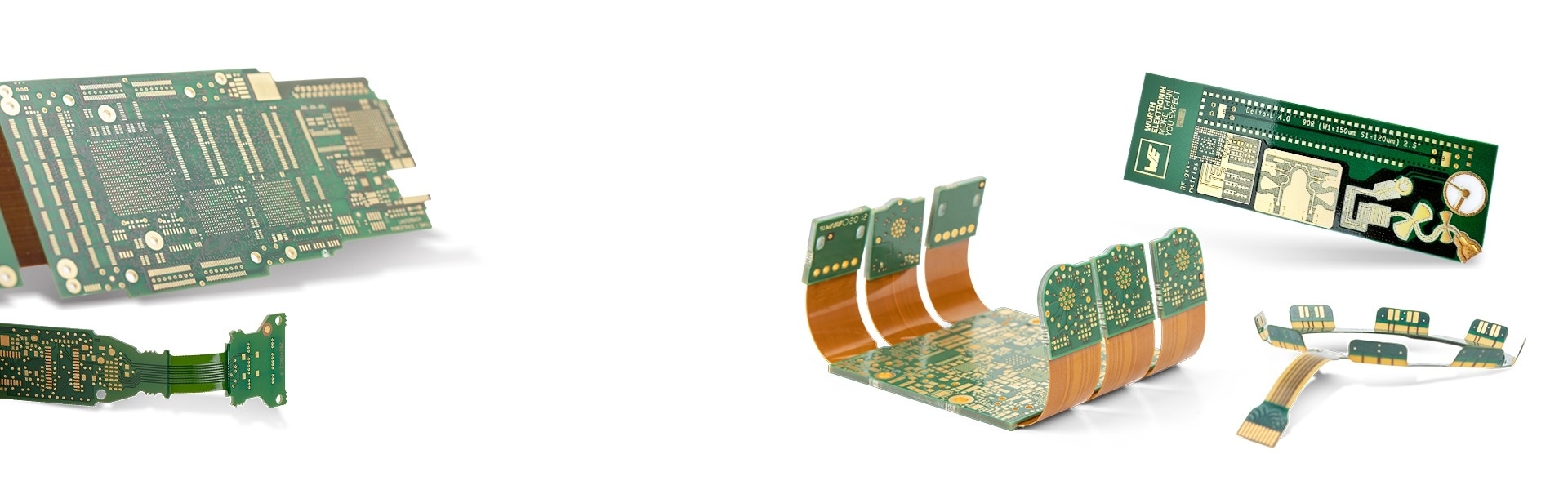
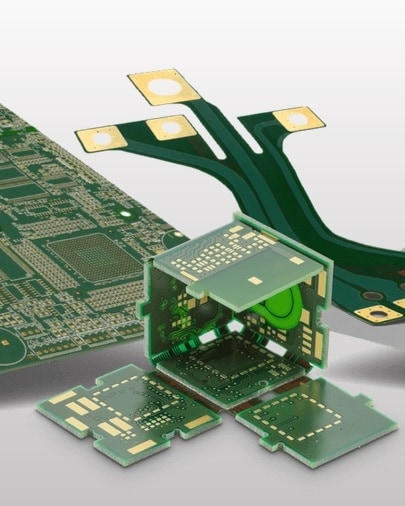
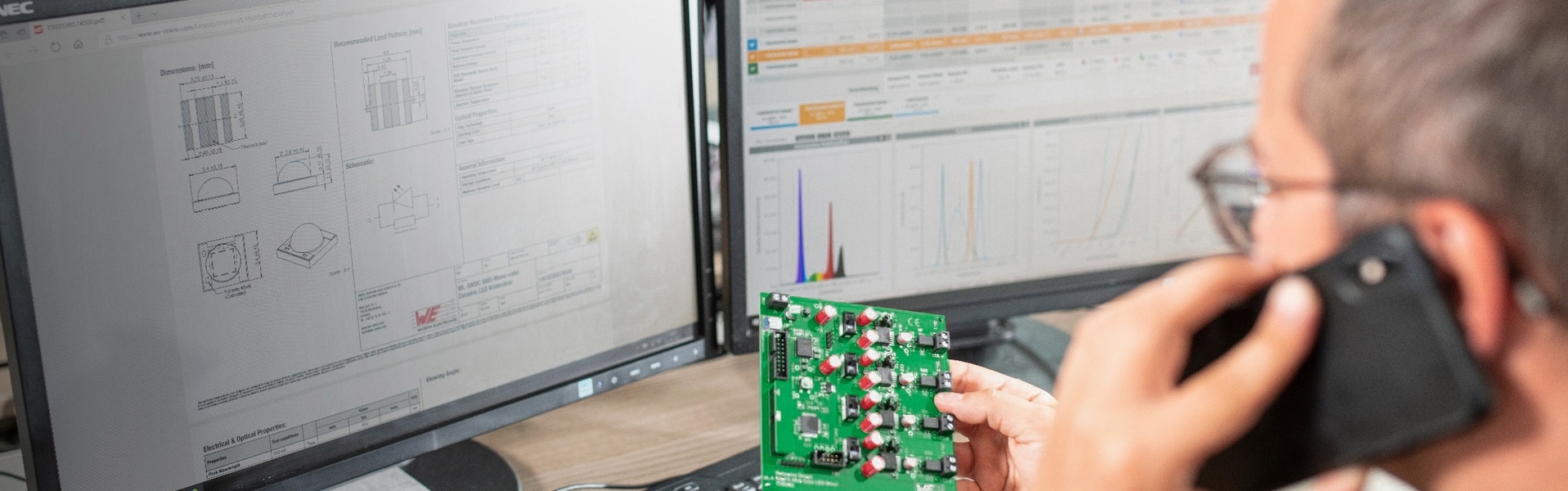
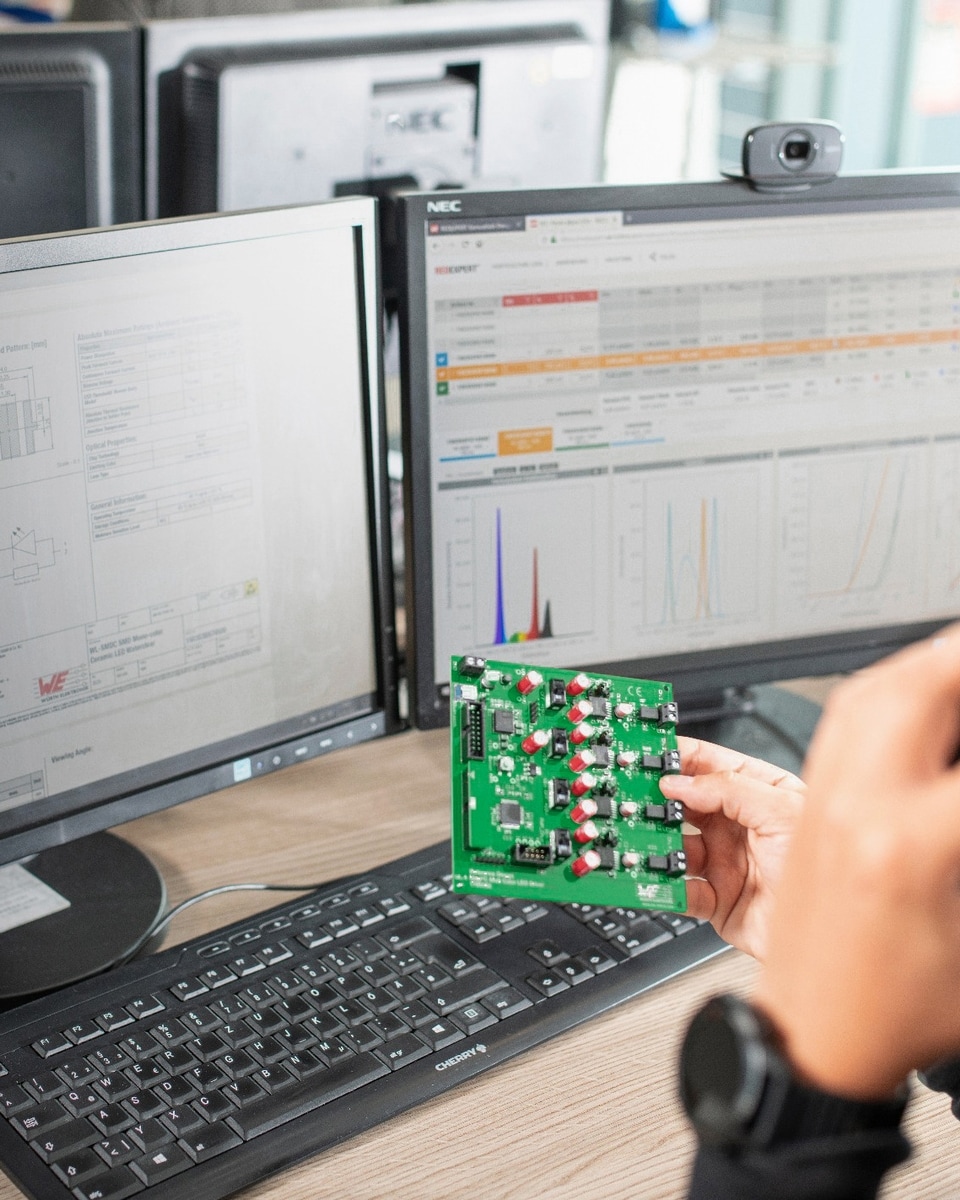
Printed circuit boards, often referred to as PCBs or substrates, are thin sheets of insulating material to which solder pads and copper conductors are applied. Metallized holes, known as "vias", connect the conductive layers of a multilayer PCB. The "conductor tracks" connect various soldered-on electronic components to form electrical circuits. The PCB itself usually does not contain any active or passive components. It serves as the basis for the application and electrical connection of the components, i.e. the PCB assembly. Printed circuit boards are used in the aerospace, automotive and communications technology sectors, among others. The high-quality PCBs from Würth Elektronik are characterized by their durability, robustness, reliability and high signal integrity. More than you expect!
Direct access to the required technology
The PCB carries and connects electronic components, thereby converting the electrical circuit diagram and its functions into hardware. As a result, the printed circuit board itself is increasingly becoming a strategically important component and plays a decisive role in the overall system. Virtually every electrical and electronically controlled device contains one or more printed circuit boards.
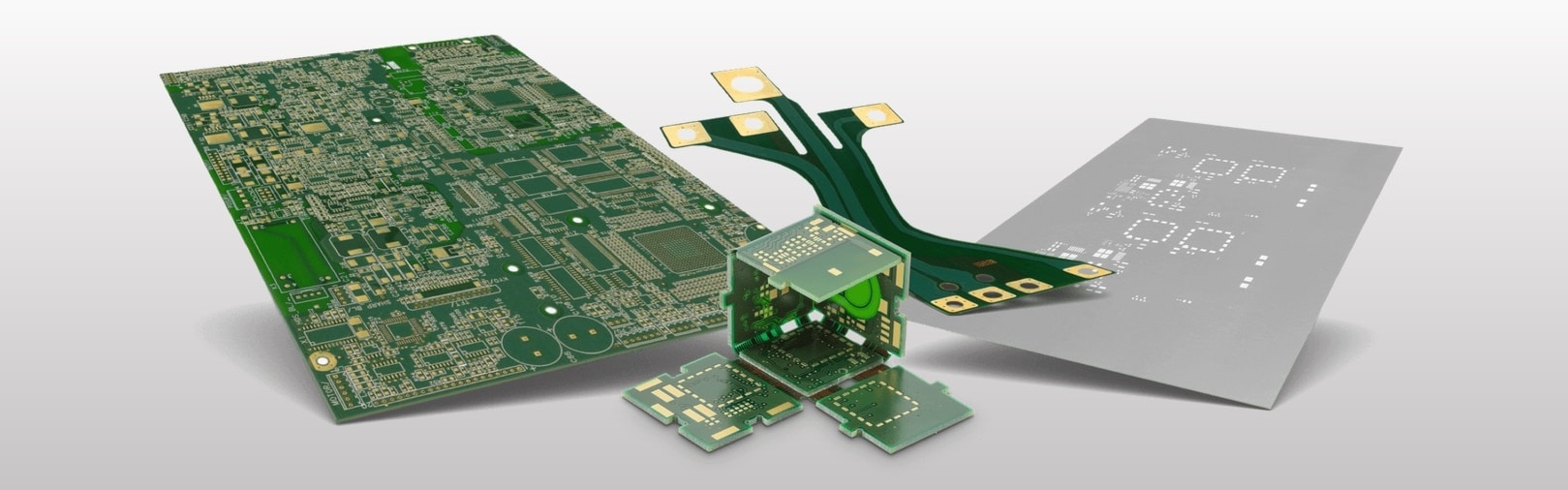
Würth Elektronik Circuit Board Technology has stood for PCB expertise since 1971. Today, as one of Europe's leading PCB supplier, we provide electronics developers with a broad portfolio of PCBs:
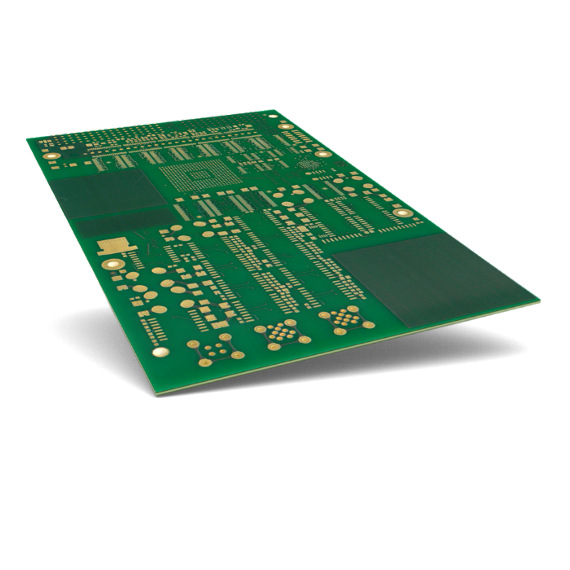
Discover our high-quality BASIC PCBs for single-sided, double-sided and multilayer requirements. These PCBs are manufactured from base material in FR4 quality and form the reliable foundation for a wide range of applications.
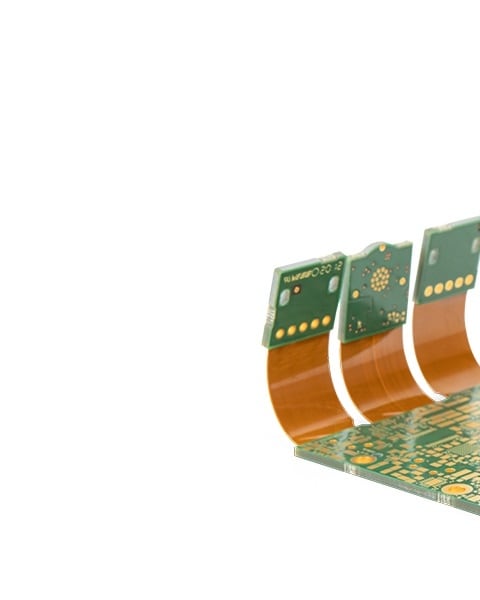
Flexible, rigid-flex and bendable PCBs offer a solution for making optimum use of the limited space in electronic devices. Thanks to their adaptability, they enable the integration of electronic components in housings with complex shapes and limited space.
High Density Interconnect (HDI) PCBs and microvia technology are essential components in modern electronics manufacturing processes, where microvias are tiny laser-drilled holes that allow electrical connection between adjacent copper layers in multilayer PCBs.
The future of electronics requires higher reliability and more functions in smaller housings, which is why efficient use of space is crucial. Embedding technology offers a solution by integrating active or passive components directly into the PCB.
As miniaturization progresses and the performance of semiconductors increases, so does the challenge of thermal management on printed circuit boards. To avoid expensive rework, we develop effective measures for heat dissipation at PCB level as early as the design phase.
Printed electronics made from polymer pastes offer an innovative alternative to conventional PCB assembly. With the help of conductive polymers, flat components such as robust contact surfaces, intelligent connection systems and complex resistors can be realized on both the inner and outer layers of the PCB.
Find out more and order now
We support our global customers with expert advice via various channels. Thanks to our dense field service network, we are always directly on site with our customers. Our internal sales team is also at your disposal. If required, our technical project management team can be involved in projects at an early stage.
In addition, we offer a wide range of PCB-related services:
WEdirekt Onlineshop
Discover our online shop for printed circuit boards and stencils. Benefit from low-cost PCB production in Germany.
A printed circuit board (PCB) hosts and interconnects electronic components, turning the electrical schematic into functional hardware. As a result, the PCB has become a strategically important mechatronic component that significantly influences overall system performance. Virtually every electrical or electronically controlled device contains one or more PCBs.
Printed circuit boards are manufactured through numerous automated steps that combine mechanical, photolithographic, thermal, and chemical processes. For multilayer PCBs, the overall sequence includes: patterning the copper layers on the inner cores, laminating the cores with prepregs and copper foils to form the multilayer stack, drilling vias using lasers and carbide tools, plating the vias and building up the outer copper layers, etching the outer layers, applying the solder mask, adding the surface finish to ensure solderability, and performing final inspections and tests.
A wide range of PCB technologies is available, depending on requirements for space, performance, and reliability. These include single-sided and double-sided PCBs, multilayers, HDI (High-Density Interconnect) and advanced microvia technologies, flexible and rigid-flex circuits, partially bendable semiflexible boards, thick-copper and power electronics PCBs, as well as specialized technologies for high-frequency, high-speed, and high-temperature applications.
Heatsink and aluminum PCBs are designed for efficient thermal management. In addition, embedding technology enables components to be integrated directly into the PCB, resulting in thinner assemblies, protection against environmental impacts and copying and improved electrical performance.
FR4 is a base material in printed circuit board and PCB production, consisting of a glass fiber-reinforced epoxy resin laminate. It is characterized by particularly high dielectric strength, mechanical strength and thermal resistance, including flame retardancy. This makes it ideal for use in multi-layer PCB constructions for a wide range of electronic applications.
SMD in printed circuit boards describes a technology or method for mounting or assembling electronic components on printed circuit boards, whereby SMD printed circuit boards use surface-mounted device technology. Electronic components are soldered directly to the surface of the board, allowing for a more compact design, higher packing densities and improved electrical performance. Unlike traditional through-hole technology (THT), this method increases production efficiency by focusing on the efficient use of board space.
Printed circuit boards are used in almost all electronic devices and systems. In the automotive industry, they are used in engine management and safety systems, among other things. They can also be found in industrial control systems, where they serve as central components in control and regulation systems in manufacturing and other industrial applications. Printed circuit boards are also indispensable components in the aerospace industry, for example for navigation, communication and monitoring systems. They are also used in medical technology, especially medical devices.
Contact us