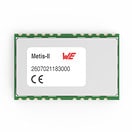
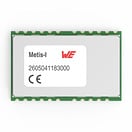
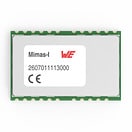
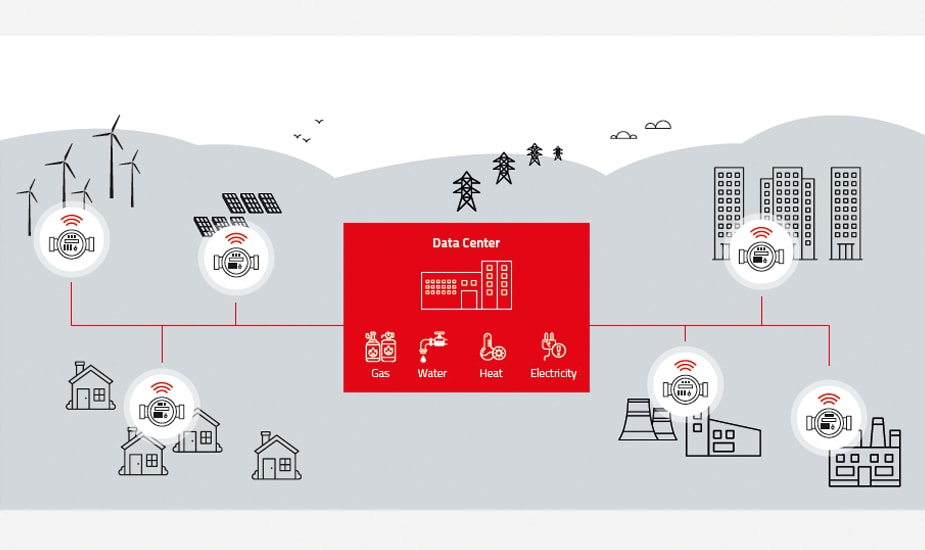
Wireless Meter Bus (wM-BUS) is the extension of the meter Bus (M-BUS) with a wireless protocol and role scheme for handling communication over a standardized wireless communication interface between meters and data loggers – so called smart meter gateways (SMGW). This scheme is specified by the European standard EN 13757 and its sub-standards. The motivation of this standard is to allow an automated measuring and processing of data, track the usage of resources and to optimize provisioning in order to create an “Advanced Metering Infrastructure” (AMI).
Such Smart grid / meter devices are typically battery operated and in need for a long range and robust wireless communication. This is the reason for using the Sub GHz frequencies in the free ISM Bands. EN13757-4 is specifying radio options in the 169 MHz, 434 MHz or 868 MHz band, regarding to the region.
User Application
Advantages for the Customers
„Almost live“ data access on his currently use of resources including a “live” cost estimation instead of yearly billing
Comparison on a day-by-day basis when data is available
No costs for the manual readout, no huddle with a yearly appointment for manual meter readout person
Secure due to encryption, only the owner of the data knows the key required for decrypting the messages of the meters
Several metering providers can share a single Smart meter Gateway (water, gas, electricity, heat cost, …)
Disadvantages for the Customers
High initial costs: Smart meter gateway and meters with wireless interface
Battery lifetime requires exchanging devices each 7 - 10 years in case of battery operated devices – due to security reasons “just” changing the battery is often prevented