Metis-I & EV-Kits
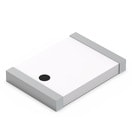
Radio Module 868 MHz wM-BUS (AMB8426-M)
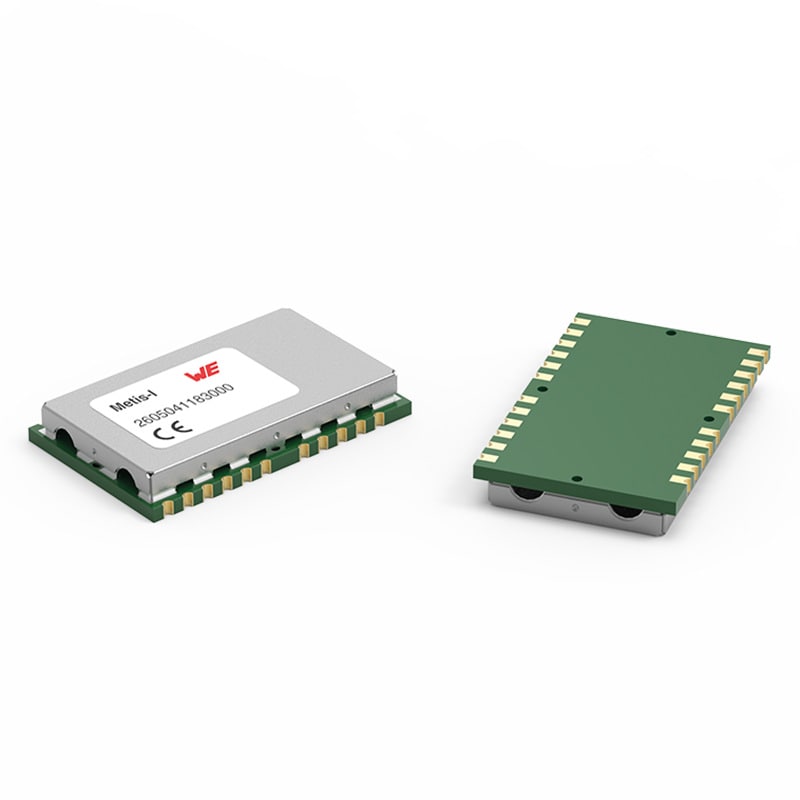
Characteristics
- Low-cost radio module 868 MHz
- Wireless M-BUS EN13757-4:2013 standard
- OMS (Open Metering System) supported
- Range up to 700 m line of sight
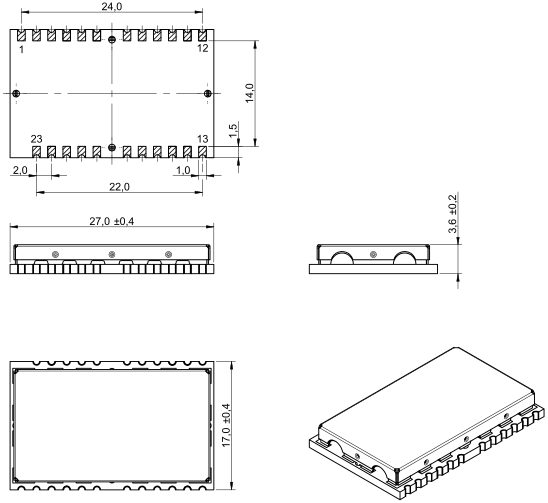
- Small size: 17 x 27 x 4.0 mm
- Low-power functions (Wake-On-Radio)
- Easy switching between operating modes S, T, C
- Adjustable RF data rates
- Communication via UART/SPI Interface
- Encryption AES-128
- Available on Tape & Reel for SMT mounting
- AMB8465-M Wireless M-BUS USB Adapter available
- Pin-to-pin compatible with Mimas-I and Metis-II
- ACC Software - PC Tool to configure and evaluate the module
- Wireless Connectivity SDK
Products
Download now free of charge
Software downloads
IoT becomes intelligent when hardware and software work together harmoniously!
-
The aim of the Wireless Connectivity Software Development Kit (SDK) is to minimize the effort required on customer side to enable his host MCU to communicate with Würth Elektronik eiSos radio modules. It contains the implementation of all available commands in pure C-code. In order to integrate any Würth Elektronik eiSos wireless module, the user has to simply port the corresponding C-code to his host processor. This significantly reduces the time needed for developing the software interface to the radio module.
-
The "ACC V3" is a tool to update and configure certain Würth Elektronik eiSos modules. The supported features will include the search and upload of new firmwares as well as the modification of the available configuration parameters. It allows full user control over all supported products, as in the range of the producer’s intentions, always referring to the respective manual of the connected module.
Due to current export legal restrictions, we are required to control the provision of software. To download the software, please contact our technical support or your local sales representative directly. Thank you for your understanding.
Wireless M-Bus
Wireless M-Bus
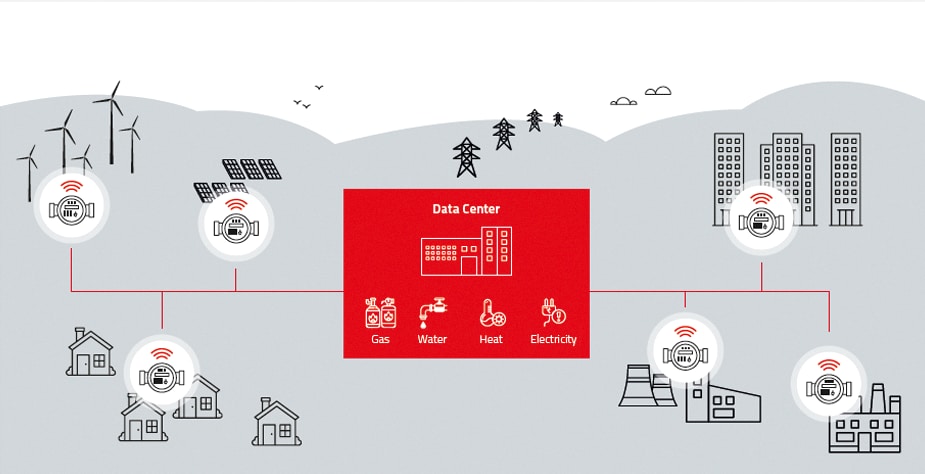
Wireless Meter Bus (wM-BUS) is the extension of the meter Bus (M-BUS) with a wireless protocol and role scheme for handling communication over a standardized wireless communication interface between meters and data loggers – so called smart meter gateways (SMGW). This scheme is specified by the European standard EN 13757 and its sub-standards. The motivation of this standard is to allow an automated measuring and processing of data, track the usage of resources and to optimize provisioning in order to create an “Advanced Metering Infrastructure” (AMI).
Such Smart grid / meter devices are typically battery operated and in need for a long range and robust wireless communication. This is the reason for using the Sub GHz frequencies in the free ISM Bands. EN13757-4 is specifying radio options in the 169 MHz, 434 MHz or 868 MHz band, regarding to the region.
User Application

Advantages for the Customers
- „Almost live“ data access on his currently use of resources including a “live” cost estimation instead of yearly billing
- Comparison on a day-by-day basis when data is available
- No costs for the manual readout, no huddle with a yearly appointment for manual meter readout person
- Secure due to encryption, only the owner of the data knows the key required for decrypting the messages of the meters
- Several metering providers can share a single Smart meter Gateway (water, gas, electricity, heat cost, …)
Disadvantages for the Customers
- High initial costs: Smart meter gateway and meters with wireless interface
- Battery lifetime requires exchanging devices each 7 - 10 years in case of battery operated devices – due to security reasons “just” changing the battery is often prevented
Antenna
Videos
Manni Talks- Unboxing the Evaluation Kit