Filter by values
 in 2 product lines for
Reset all
Filter
Filter by
 show  articles in 2 product lines
 articles in 2 product lines
Reset all
2 Product categories
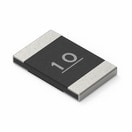
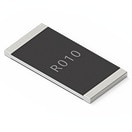
WRIS-PSMB Metal Plate Resistors
Enhanced Current SensingR 5 to 10 mΩPRated 0.33 to 1 W
WRIS-PSMC Metal Plate Resistors
High Power Current SensingR 2 to 10 mΩPRated 2 W
Order Code
Data­sheet
Simu­lation
Downloads
Status
R
Tol. R
PRated(W)
TCR(ppm/ °C)
TCR(ppm/ °C)
IR(A)
L(mm)
W(mm)
H(mm)
Product series
Design Kit
SamplesAvailability & Sample
WRIS-PSMC Metal Plate Resistors
SPEC2 mΩ, ±1%, 2 W
Simu­lation
Availability
Status
ActiveProduction is active. Expected lifetime: >10 years.
iProduction is active. Expected lifetime: >10 years.
Resistance2 mΩ
Resistance±1% 
Rated Power2 W
Temperature Coefficient of Resistance (min.)-100 ppm/ °C
Temperature Coefficient of Resistance (max.)100 ppm/ °C
Rated Current31.62 A
Length6.3 mm
Width3.1 mm
Height0.58 mm
Design Kit
Check availability
WRIS-PSMC Metal Plate Resistors
SPEC2 mΩ, ±5%, 2 W
Simu­lation
Availability
Status
ActiveProduction is active. Expected lifetime: >10 years.
iProduction is active. Expected lifetime: >10 years.
Resistance2 mΩ
Resistance±5% 
Rated Power2 W
Temperature Coefficient of Resistance (min.)100 ppm/ °C
Temperature Coefficient of Resistance (max.)100 ppm/ °C
Rated Current31.62 A
Length6.3 mm
Width3.1 mm
Height0.58 mm
Design Kit
Check availability
WRIS-PSMC Metal Plate Resistors
SPEC5 mΩ, ±1%, 0.33 W
Simu­lation
Availability
Status
ActiveProduction is active. Expected lifetime: >10 years.
iProduction is active. Expected lifetime: >10 years.
Resistance5 mΩ
Resistance±1% 
Rated Power0.33 W
Temperature Coefficient of Resistance (min.)-100 ppm/ °C
Temperature Coefficient of Resistance (max.)100 ppm/ °C
Rated Current8.12 A
Length1.6 mm
Width0.8 mm
Height0.35 mm
Design Kit
Check availability
WRIS-PSMC Metal Plate Resistors
SPEC5 mΩ, ±1%, 0.5 W
Simu­lation
Availability
Status
ActiveProduction is active. Expected lifetime: >10 years.
iProduction is active. Expected lifetime: >10 years.
Resistance5 mΩ
Resistance±1% 
Rated Power0.5 W
Temperature Coefficient of Resistance (min.)-100 ppm/ °C
Temperature Coefficient of Resistance (max.)100 ppm/ °C
Rated Current10 A
Length2 mm
Width1.25 mm
Height0.35 mm
Design Kit
Check availability
WRIS-PSMC Metal Plate Resistors
SPEC5 mΩ, ±1%, 2 W
Simu­lation
Availability
Status
ActiveProduction is active. Expected lifetime: >10 years.
iProduction is active. Expected lifetime: >10 years.
Resistance5 mΩ
Resistance±1% 
Rated Power2 W
Temperature Coefficient of Resistance (min.)-100 ppm/ °C
Temperature Coefficient of Resistance (max.)100 ppm/ °C
Rated Current20 A
Length6.3 mm
Width3.1 mm
Height0.51 mm
Design Kit
Check availability
WRIS-PSMC Metal Plate Resistors
SPEC7 mΩ, ±1%, 1 W
Simu­lation
Availability
Status
ActiveProduction is active. Expected lifetime: >10 years.
iProduction is active. Expected lifetime: >10 years.
Resistance7 mΩ
Resistance±1% 
Rated Power1 W
Temperature Coefficient of Resistance (min.)100 ppm/ °C
Temperature Coefficient of Resistance (max.)100 ppm/ °C
Rated Current12 A
Length6.3 mm
Width3.1 mm
Height0.35 mm
Design Kit
Check availability
WRIS-PSMC Metal Plate Resistors
SPEC10 mΩ, ±1%, 0.33 W
Simu­lation
Availability
Status
ActiveProduction is active. Expected lifetime: >10 years.
iProduction is active. Expected lifetime: >10 years.
Resistance10 mΩ
Resistance±1% 
Rated Power0.33 W
Temperature Coefficient of Resistance (min.)-100 ppm/ °C
Temperature Coefficient of Resistance (max.)100 ppm/ °C
Rated Current5.74 A
Length1.6 mm
Width0.8 mm
Height0.3 mm
Design Kit
Check availability
WRIS-PSMC Metal Plate Resistors
SPEC10 mΩ, ±1%, 0.5 W
Simu­lation
Availability
Status
ActiveProduction is active. Expected lifetime: >10 years.
iProduction is active. Expected lifetime: >10 years.
Resistance10 mΩ
Resistance±1% 
Rated Power0.5 W
Temperature Coefficient of Resistance (min.)-100 ppm/ °C
Temperature Coefficient of Resistance (max.)100 ppm/ °C
Rated Current7.07 A
Length2 mm
Width1.25 mm
Height0.22 mm
Design Kit
Check availability
WRIS-PSMC Metal Plate Resistors
SPEC10 mΩ, ±1%, 2 W
Simu­lation
Availability
Status
ActiveProduction is active. Expected lifetime: >10 years.
iProduction is active. Expected lifetime: >10 years.
Resistance10 mΩ
Resistance±1% 
Rated Power2 W
Temperature Coefficient of Resistance (min.)-100 ppm/ °C
Temperature Coefficient of Resistance (max.)100 ppm/ °C
Rated Current14.14 A
Length6.3 mm
Width3.1 mm
Height0.35 mm
Design Kit
Check availability
WRIS-PSMC Metal Plate Resistors
SPEC10 mΩ, ±1%, 1 W
Simu­lation
Availability
Status
ActiveProduction is active. Expected lifetime: >10 years.
iProduction is active. Expected lifetime: >10 years.
Resistance10 mΩ
Resistance±1% 
Rated Power1 W
Temperature Coefficient of Resistance (min.)-70 ppm/ °C
Temperature Coefficient of Resistance (max.)70 ppm/ °C
Rated Current10 A
Length3.2 mm
Width1.6 mm
Height0.28 mm
Design Kit
Check availability

Würth Elektronik Resistors

METAL PLATE

You will find an overview of our current technoogies available in the graph. More details (e.g. series, characteristics, features, applications, etc.) about Metal Plate resistors.

Würth Elektronik resistors_p1

Derating curves

Derating curves

Due to self heating during operation, maximum operating power (I² * R) must be reduced at high ambient temperature according to this derating curve. From 70°C ambient temperature the power is linearly reduced down to 0 at maximum temperature of 155°C. See detailed current values for each product in REDEXPERT.

Derating curves

Construction

  • Current detection of a few tens of amperes
  • Ultra low resistance values (up to 10 mΩ)


Features

  • Superior abilities in case of power, temperature characteristics, linearity, accuracy and current-noise suppression level
  • Stability and robustness make them suitable for current sensing applications


Construction

  • Consists of a metal plate as core material
  • Metal plate is covered with an isolated layer
  • Termination consists from the inside out of a copper, nickel and tin layer
 construction-de

How does Current Sensing of the Application work?

  • Using a resistor within the circuit of the application to make the current measurable (called: shunt)
  • The current through such a resistor generates a proportional voltage drop according                                          to Ohm’s Law: Imeas = VRshunt / Rshunt
  • Very low resistance values are used to generate a low voltage drop up to a few hundred mV
  • In case of low currents, very precise resistance values and an amplifying circuit have to be used to get stable measurements, because of the very small voltage drop


stromessung-grafik

Example Application

Switched-Mode-Power-Supply

Switched-Mode-Power-Supply

Inverter

Inverter

Electric Motor

Electric Motor

Measurements

Redexpert

Measurements

Redexpert

With the help of REDEXPERT you will find the right resistor based on your technical requirements. The tool supports, for example, with measured values for rated resistance, voltage & power. The ability to compare individual components with each other in terms of measured values enables convenient component selection.

Computer screen with overlapping windows, graphs, and red 3D text: 'ONLINE PLATFORM BASED ON MEASURED VALUES.'

FAQ Resistors - Metal plate

Answer: The pulse limit is determined from the rated current or the maximum voltage per element, regardless of pulse time. A single pulse or continuous pulse operation data can be provided upon request.


Answer: Choose a current sensing resistor by balancing resistance (low enough to reduce losses but high enough for measurable voltage), power rating (must safely handle), and accuracy factors like low TCR and tight tolerance. Also consider package size for heat dissipation. For high current and precision, metal plate resistors are preferred over thick film types.


Answer:A four-pole (Kelvin) measurement can be approximated with a two-terminal resistor by separating current and sense paths and placing the sense lines close to the resistor terminals. This reduces the influence of voltage drops in PCB traces. However, accuracy is still limited due to parasitic resistances, so true 4-terminal resistors are preferred for precise measurements.