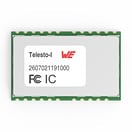
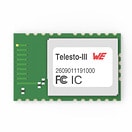
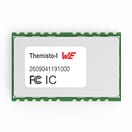
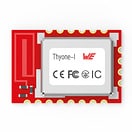
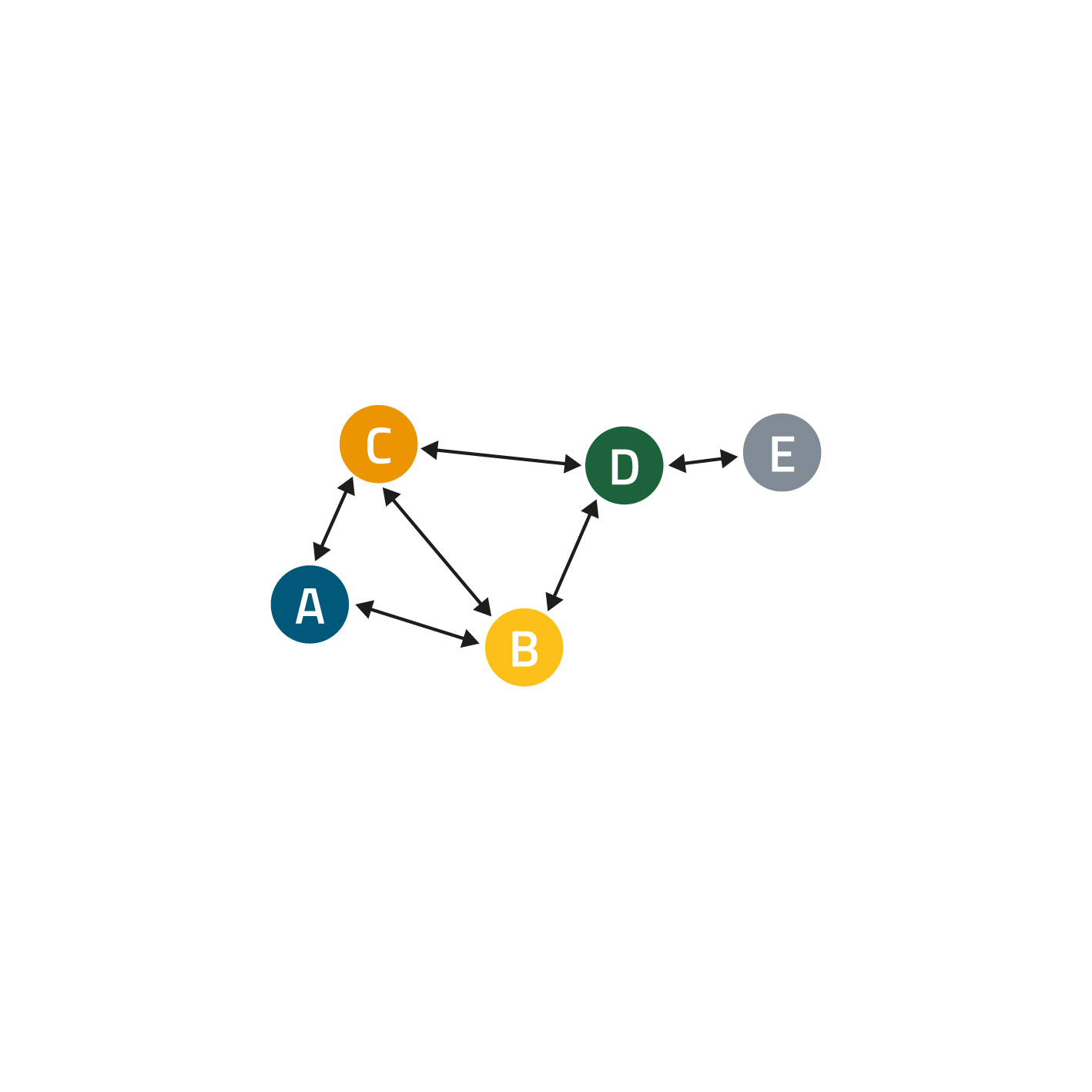
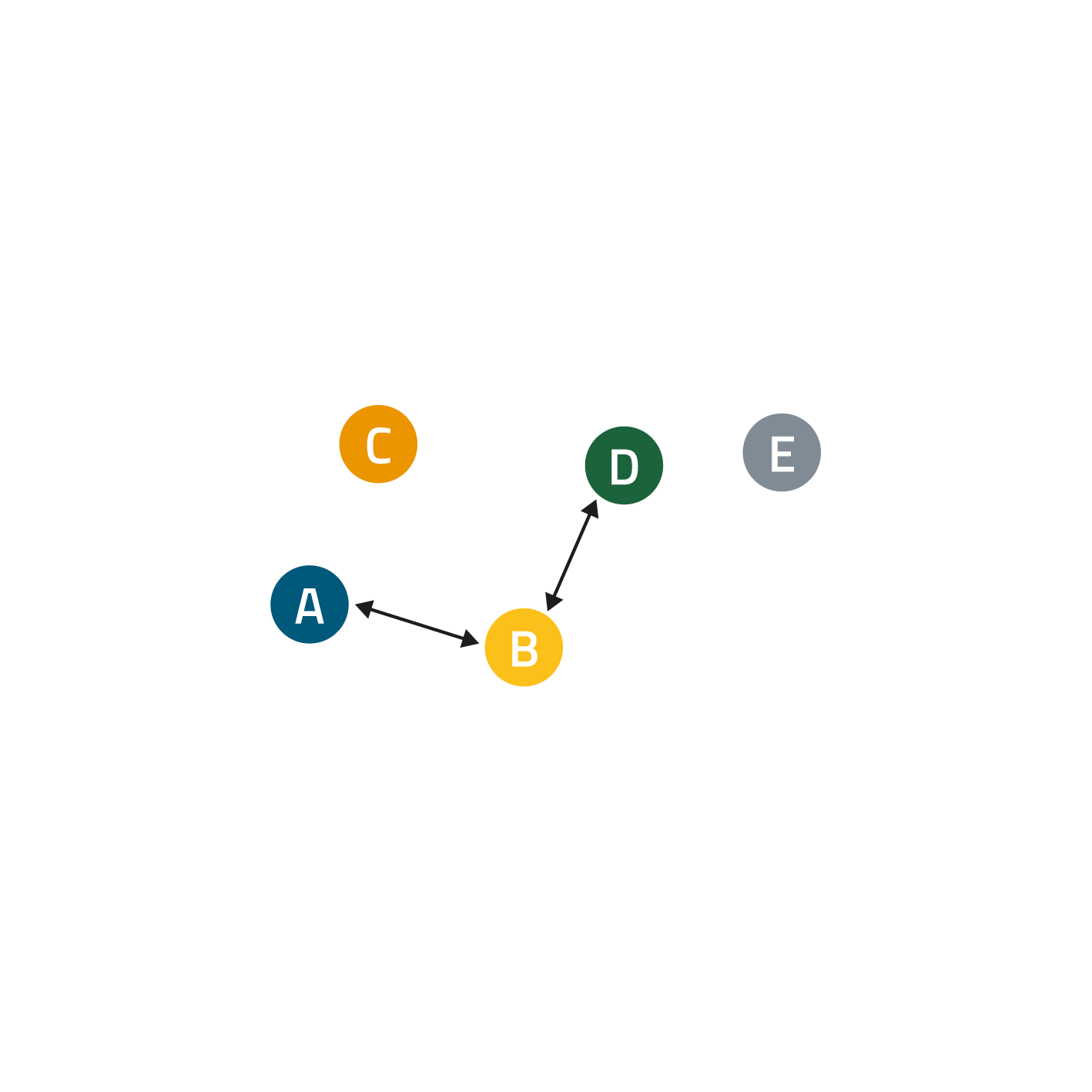
A mesh is a network of nodes, where messages are propagated through the net to the dedicated receiver.
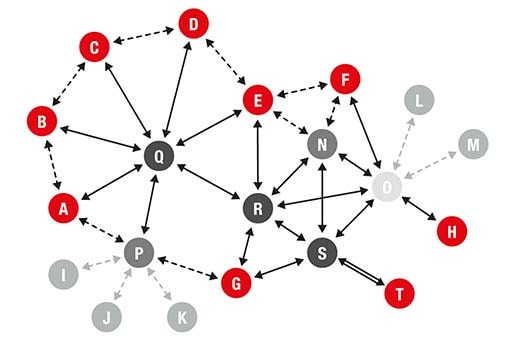
A mesh refers to a multiple connection between devices or nodes: the nodes/devices connect directly, dynamically and non-hierarchically to as many other nodes as possible and cooperate with one another to efficiently route data.
They differ from conventional network topologies, which are based on the hierarchical connection between a small subset of nodes.
WE meet @ Digital Days 2021: Wirepas Mesh: From Concept to Prototyping
Network Topologies
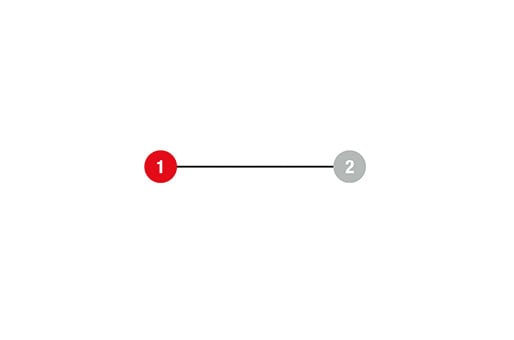
Conventional Network Topologys: Point to Point
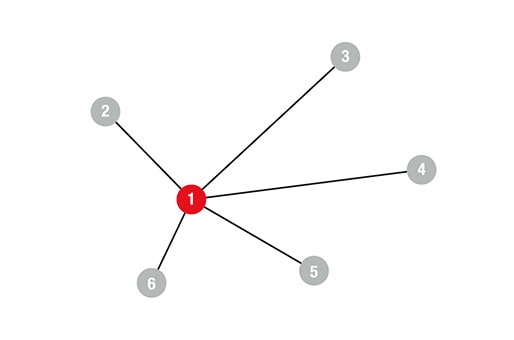
Conventional Network Topologys: Star
Mesh Network Topology
What are the main parameters and characteristics of a mesh network?
Speed
Current consumption
Throughput
Maximum number of nodes
Installation effort
Robustness
Mesh Technologies
Flooding Mesh
Each node just forwards the message. We differentiate between synchronous and asynchronous flooding mesh.
Advantages:
Easy to use
No network organization (installation, change)
Size does not matter
Disadvantages:
Increased traffic
Duty cycle problems
Routing Mesh
The network master or each node knows the path.
Advantages:
Shortest/Cheapest path
Disadvantages:
Extra network organization traffic
Size limitations (master handled)
Less robust on network changes
Master has to know when adding/removing a node
Asynchronus Mesh
Messages can be transmitted at any time
Advantages:
Fast
No installation effort
No size limitations
Disadvantages:
Energy consuming (~100% RX)
High probability for radio packet collision
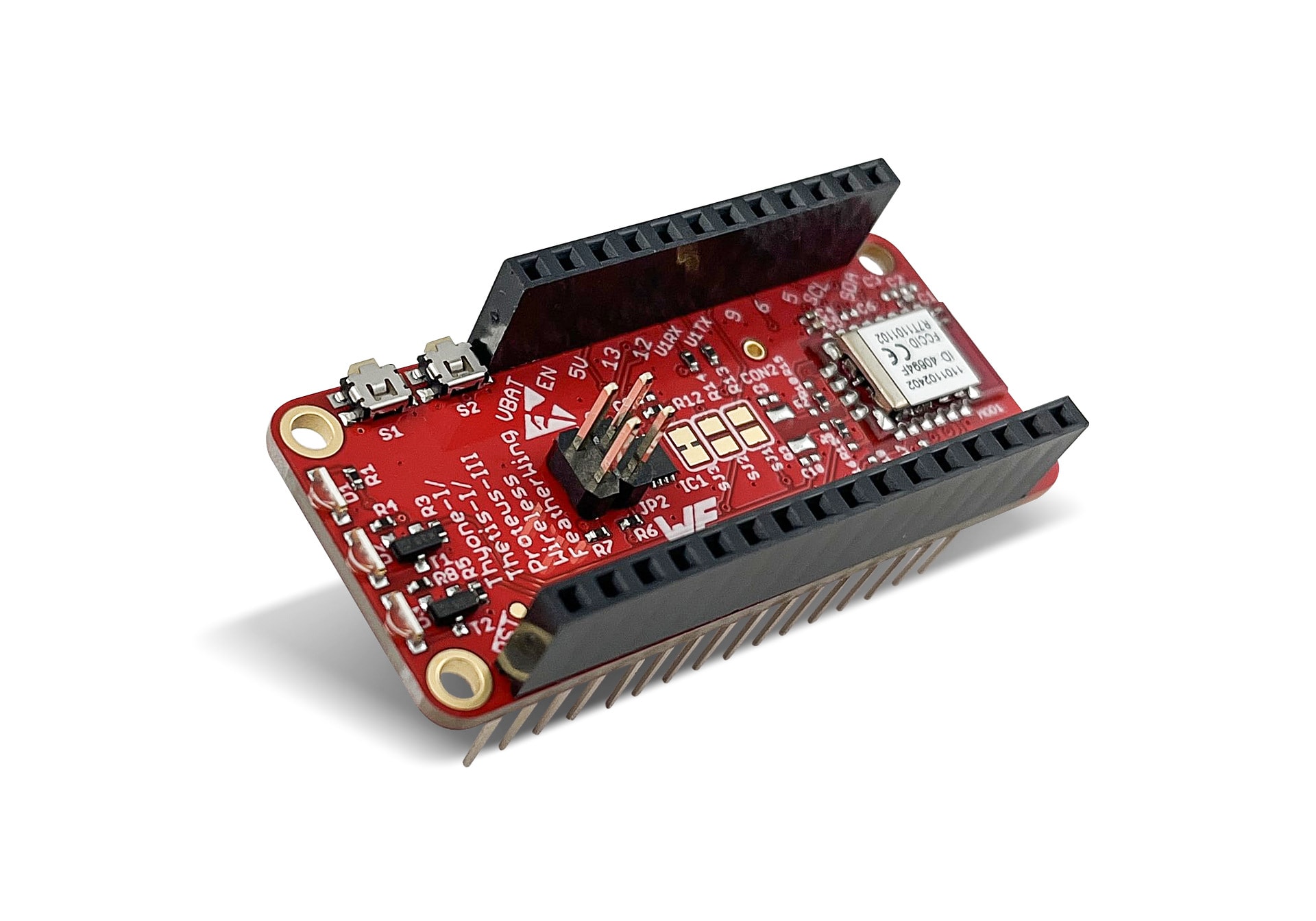
The WE-ProWare Asynchronous Flooding Mesh is integrated into following products
[Thyone-I]()
[Tarvos-III]()
[Thebe-II]()
[Thelesto-III]()
[Themisto-I]()
Synchronus Mesh
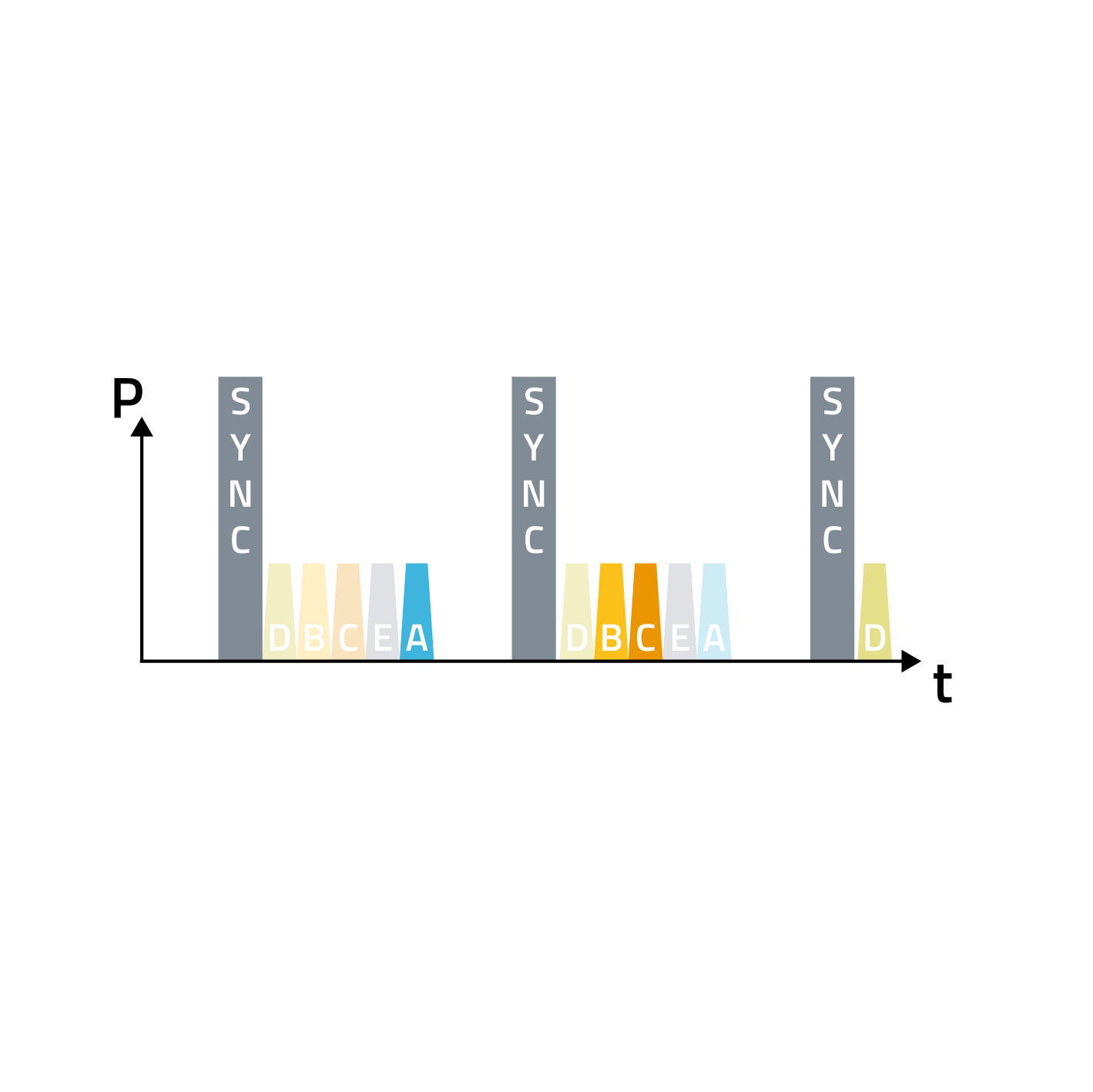
All nodes are synchronized and transmit/receive at determined time slots.
Advantages:
Energy efficient (sleeping mostly)
Time and frequency hopping possible
Disadvantages:
Synchronization effort (master needed)
Size limitation
Low throughput/High latency
Which Mesh solutions can WE offer you today? - WE-ProWare
Asynchronous flooding mesh capability is integrated into our proprietary firmware for the modules [Thyone-I](), [Tarvos-III](), [Thebe-II](), [Thelesto-III]() & [Themisto-I]().
Which Mesh solutions can WE offer you today? - Wirepas
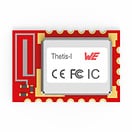
Asynchronous and synchronous routing mesh capability is integrated into our Wirepas module [Thetis-I]().
Wirepas Mesh
What is Wirepas?
Wirepas is an international company with headquarters in Tampere, Finland.
Wirepas is specialized in IoT topics and offers the Wirepas Mesh stack (firmware only) and support to high volume customers. Würth Elektronik is in cooperation with Wirepas to integrate the Wirepas mesh stack into radio chips as well as offering service to our customers to develop Wirepas mesh radio modules based on the existing Nordic Semiconductor nRF platform.
Würth Elektronik is licensed to develop, support and sell standard and custom Wirepas mesh radio modules.
What is Wirepas Mesh?
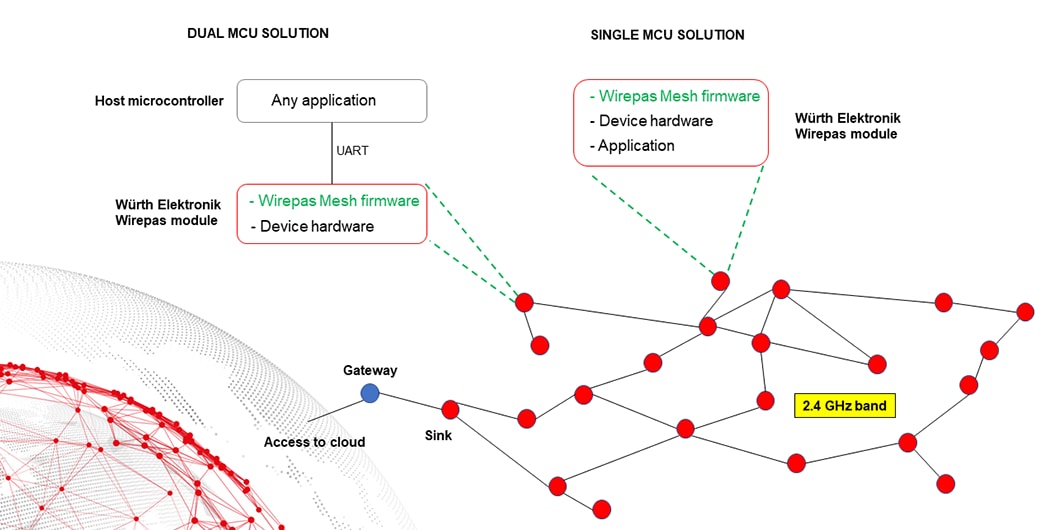
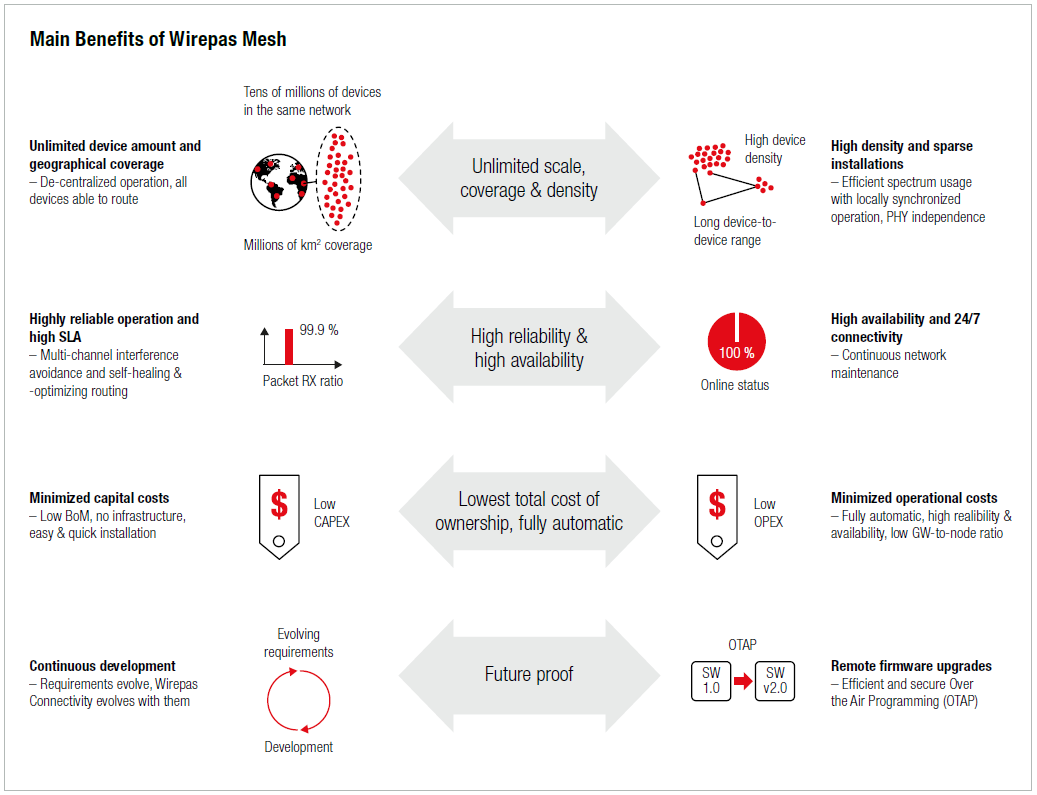
Wirepas Mesh is a connectivity protocol for radio modules, optimized for large scale and energy efficient wireless mesh networks in the frequency 2.4 GHz. This innovative technology can be used to create large IoT networks, for example using battery-powered sensors, in which each node also functions as a router.
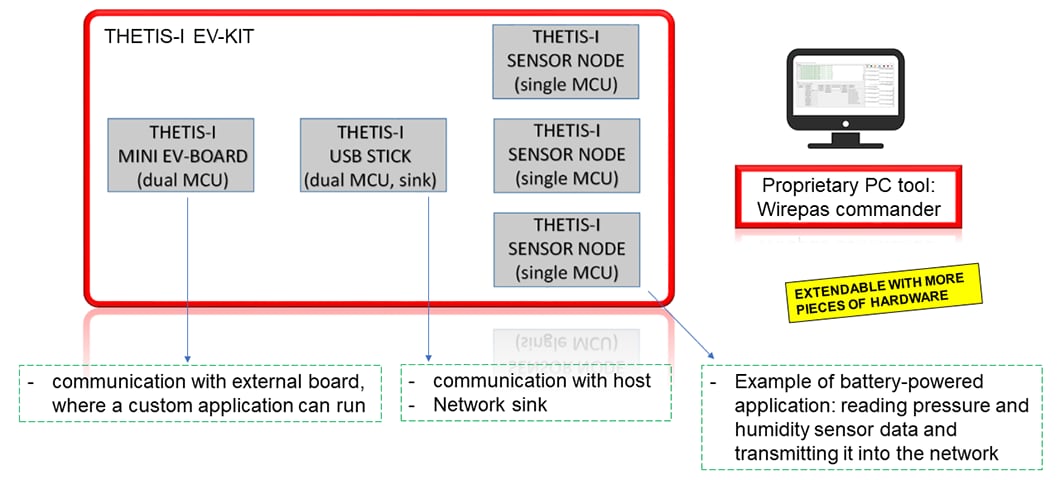
On a single MCU solution, the application runs on the device itself. On a dual MCU solution, the application runs on a host microcontroller.
What are the strengths of Wirepas Mesh protocol?
Traditional mesh networks suffer in large scale from complex networking tables, congestion and bandwidth issues. Wirepas overcomes these issues by removing network‘s infrastructures and decentralizing network‘s intelligence on the nodes. All networking decisions are done locally by the nodes. Every node:
scans automatically the neighborhood and choose the best path to the sink
adapts transmit power to neighbor proximity
can act as sink, routing or non-routing node
can work in low power or low latency mode
chooses the best frequency to use locally
has a high configurability, interference-tolerance, ultra-low energy consumption: Wirepas mesh software is ideal for large scale and battery-operated networks.
How can I start building up my Wirepas prototype network?
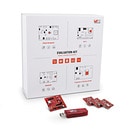
The Thetis-I Evaluation-Kit
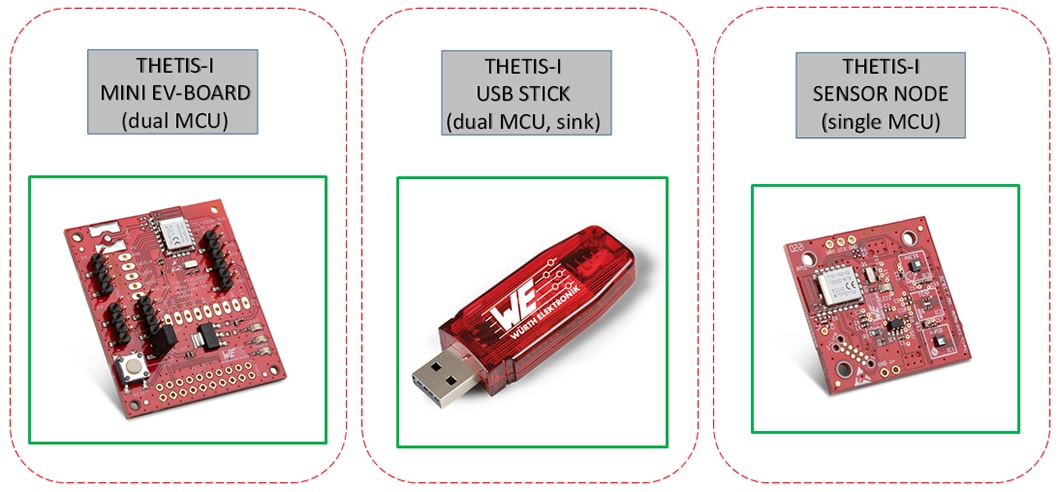
For Thetis-I we offer a specific Evaluation kit, which consists of:
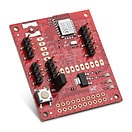
1 Mini Evaluation Board
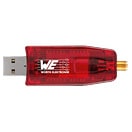
1 USB Stick
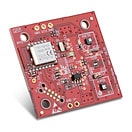
3 battery driven sensor nodes
Their specific functions are showed in the picture below.
In case you need a larger test network, you can simply extend your starter kit by purchasing additional pieces of any of the three hardware components ( [mini evaluation board](), [USB stick](), [sensor node]() ).
Together with our proprietary software tool Wirepas Commander, you can setup and test your Wirepas network in few easy step.