
- Eleazar Falco
- Optoelektronik
- 17. Juli 2026
- Lesezeit: 10 Min.

Opto-triac operation and design guide
Neuste AppNotes
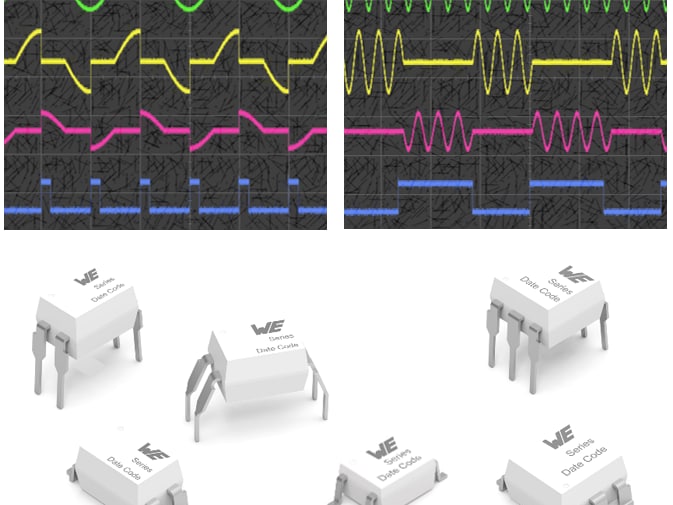
Optically-isolated TRIACs, also known as opto-triacs or phototriacs, are low-power devices typically used in conjunction with high-power TRIACs to regulate power to loads supplied from the AC-mains, effectively acting as galvanically-isolated, solid-state AC switches. Despite being around for many decades, they are still key components today in several industrial and home-appliance applications, among others.
Starting with a review of thyristor and TRIAC devices, this application note dives into the operation of random-phase (RP) and zero-cross (ZC) opto-triac types, covering their parameters and important design considerations in their target application as a TRIAC driver. In addition, an EMI performance comparison of the two opto-triac types is also included, all accompanied by extensive measurements with the WL-OCTR opto-triac series from Würth Elektronik.
Main topics:
- Background on thyristor and TRIAC devices
- Operation of Random-Phase (RP) and Zero-Cross (ZC) opto-triacs
- Opto-triac parameters
- Opto-triac as an isolated TRIAC driver
- EMC tests and design considerations
Download: ANO016
Neuste AppNotes


Unser Autor