
Blog
- Gerhard Stelzer
- Emerging Technology
- 04. June 2025

Part 2: Cybersecurity becomes mandatory for connected products
Content you may also like
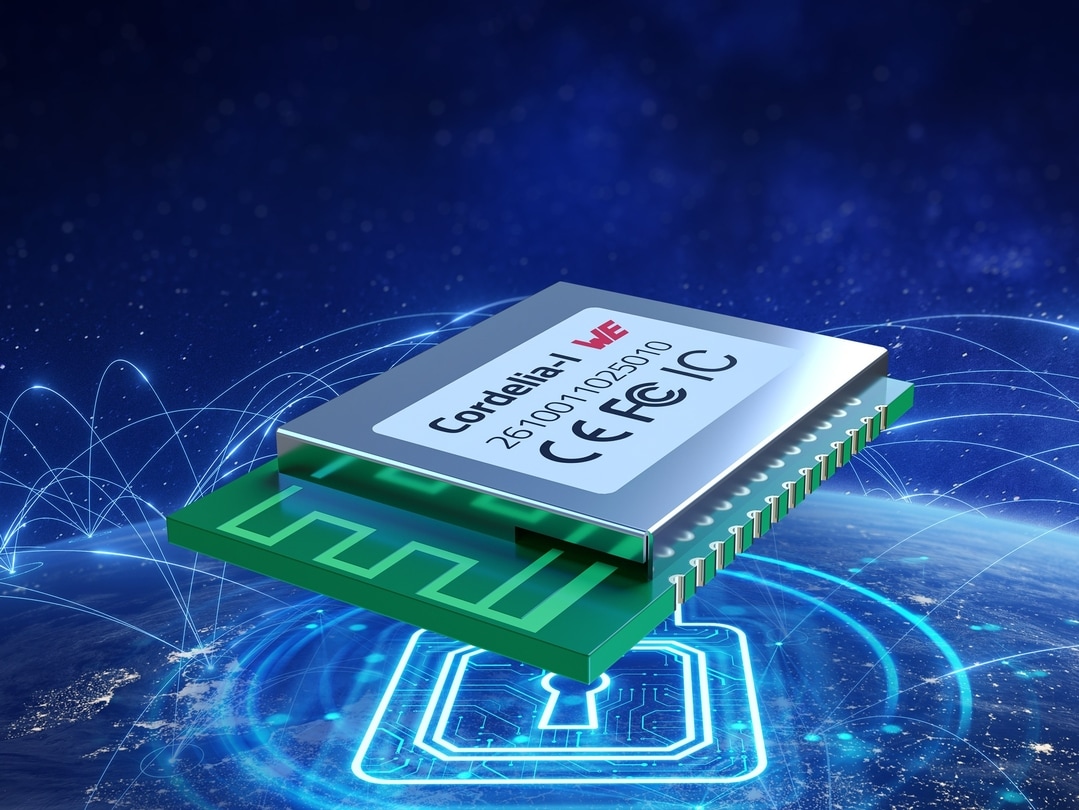
Cybersecurity is shifting into the focus of European regulation. According to the EU Radio Equipment Directive, by August 2025, products with radio technology and internet access must protect networks and personal data and prevent fraud. The EN18031 standard is designed to assist manufacturers in implementation. Part 2 looks into its application.
The EU Cyber Resilience Act (CRA) introduces completely new cybersecurity requirements for electronic devices. It was published in the Official Journal of the EU in November 2024 and is therefore applicable law. However, no standards exist for it yet. A transitional period is therefore expected to apply until December 2027, after which new products will have to comply with the CRA.
Until then, the Radio Equipment Directive (RED) is intended to enhance cybersecurity, at least for all wireless devices. To this end, the EU amended the RED in 2022, supplementing Article 3(3), to now define the following three sub-points:
- 3(3)(d) to ensure network protection
- 3(3)(e) to safeguard personal data and privacy
- 3(3)(f) to ensure protection against fraud
The deadline for implementation now runs until August 1, 2025. After that, no wireless devices may be placed on the EU market unless they meet the cybersecurity requirements of the RED.
EN 18031 standard facilitates implementation
The EN 18031 standard translates the cybersecurity aspects of the RED into specific testing procedures and was developed by the CENELEC standards organization on behalf of the EU. In October 2024, CENELEC submitted EN 18031 to the European Commission for review. The standard was harmonized in January 2025, meaning that new products no longer have to be certified by an accredited testing service provider (Figure 5). A self-declaration of conformity is sufficient.
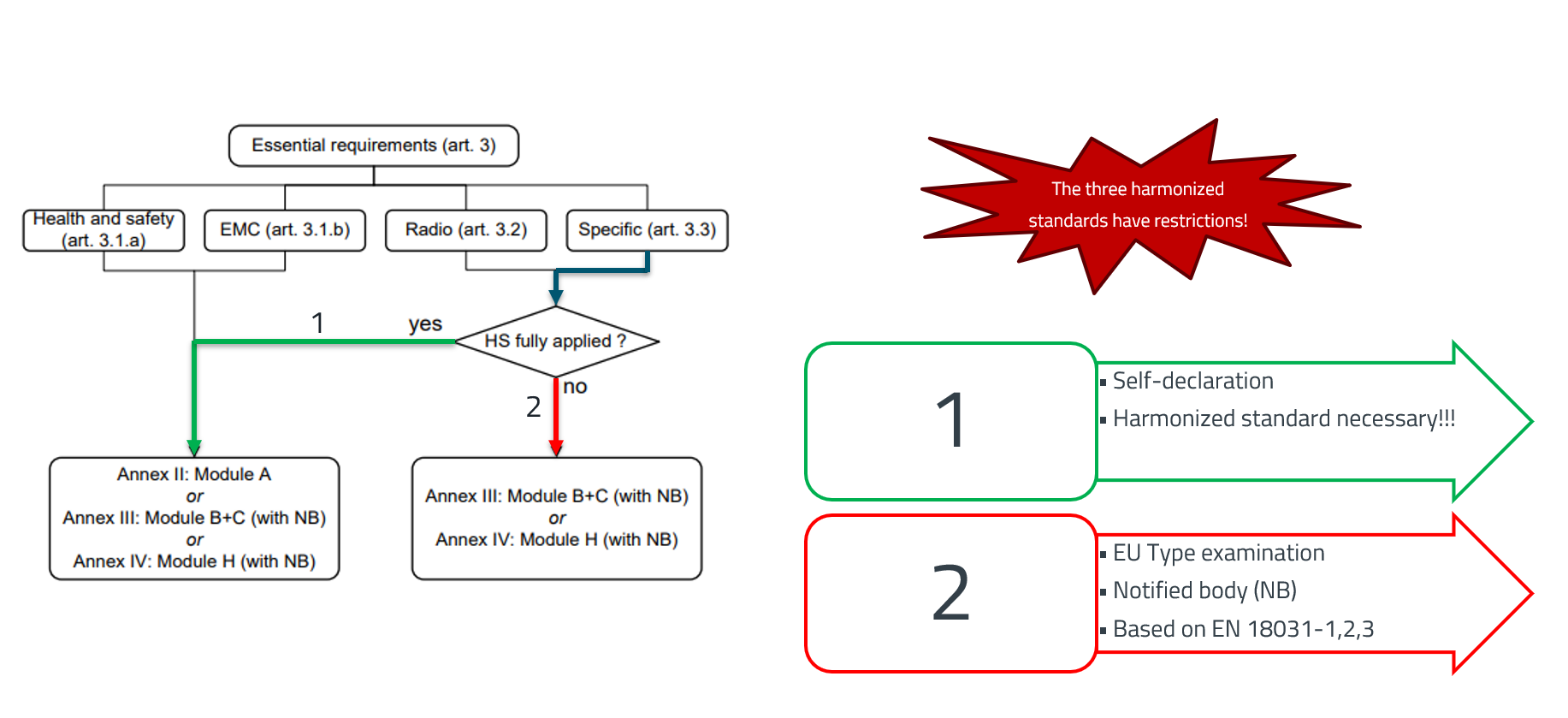
Figure 5. Whether a product’s conformity can be assessed in-house depends on the existence of a harmonized standard. Otherwise, certified service providers (Notified Bodies) come into play. (Source: European Commission – RED Guide [4])
Conformity test, taking the example of a WiFi module
The conformity test is illustrated here taking the example of Würth Elektronik’s IoT WiFi module Cordelia-I [5]. The WiFi module is fully compliant with the RED, including the cybersecurity extension 2022/30/EU from January 2022. The Cordelia-I module complies with IEEE 802.11 b/g/n, operates in the 2.4 GHz band, and is characterized by the following features:
- Zero-touch provisioning with QuarkLink (more on this later)
- Secure UART-to-cloud bridge (transparent mode)
- Small form factor: 19 x 27.5 x 4 mm3
- Sleep mode <10 μA
- Intelligent antenna configuration (2-in-1 module)
- Output power +18 dBm peak (1DSSS)
- Receiver sensitivity: –92 dBm (1 DSSS, 8% PER)
- Industrial temperature range: -40°C up to +85°C
According to the RED, cybersecurity for wireless devices such as radio modules must be ensured in accordance with Article 3(3). For the Cordelia-I radio module, only Article 3(3)(d) – protection of the network is relevant, as neither personal data under 3(3)(e) nor financial data under 3(3)(f) is processed. It follows that Cordelia-I must be tested in accordance with EN 18031-1:2024.
The core requirements of EN 18031-1:2024 for a wireless device in terms of cybersecurity are:
- authentication and authorization
- data protection
- software and firmware security
- network security
- physical security
- incident response and management
- user awareness and education
- compliance with regulations and documentation
The standard provides assistance for testing using decision trees. A cascading question structure is used, with “yes” and “no” answers provided. If the answer is “yes”, meaning the result is “not applicable”, the respective test is not required for the product under test. For the final question in the cascade, the “yes” answer means a “pass” for the test. A “no” answer results in a “fail,” and corrective action may be required.
The cybersecurity space is volatile and constantly evolving, for example, with the CRA coming into effect at the end of 2027. It is important to conduct a cybersecurity risk analysis at an early stage of the design process and to continuous this analysis throughout the product lifecycle. The implementation of cybersecurity involves more than just hardware and software. “Policies” also play an important role, such as a vulnerability reporting system, software updates, ease of installation and maintenance, etc. The goal must be “security by design”.
Design of a security concept for an embedded device
When designing a security concept for an embedded device, several key questions have to be asked and answered: Which asset needs protection? What does the threat look like? Which security objective do we have? What do we need to achieve it? Figure 6 illustrates these security requirements for different assets.
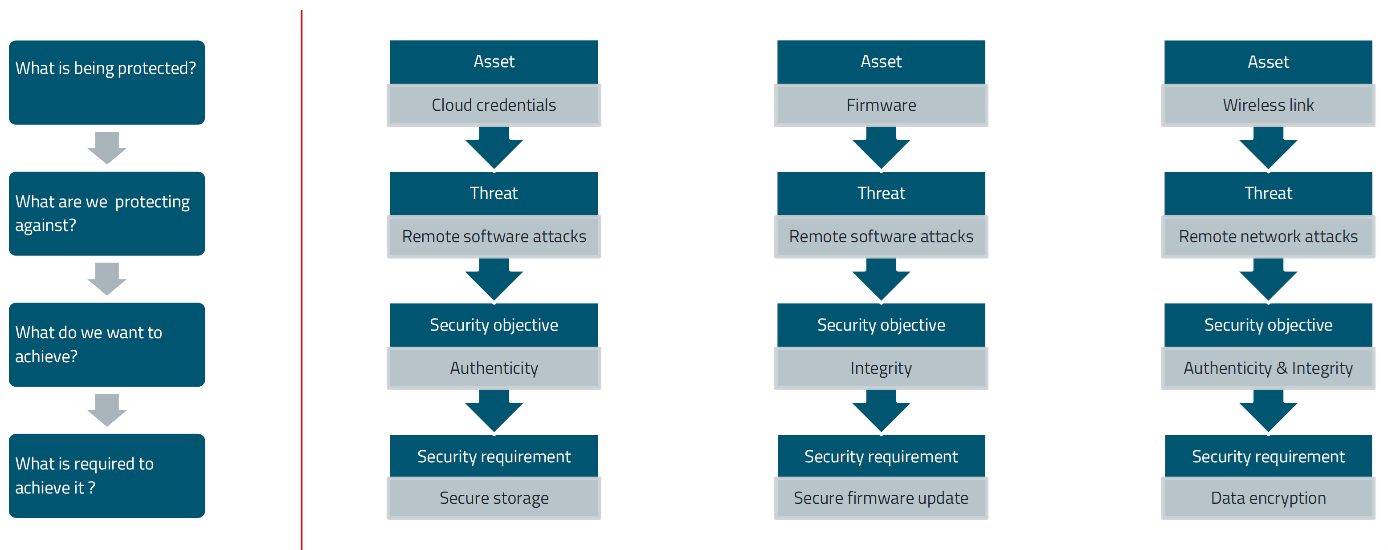
Figure 6. Design of a security concept for an embedded device with various assets to be protected. (Source: Würth Elektronik)
The current state of cybersecurity measures in a typical IoT application encompasses a range of security elements:
- A secure “root of trust“ is a unique identity along with a cryptographic key associated with it. As the entire security chain relies on this foundation of trust, it is essential that a RoT is unique, unchangeable, and unclonable.
- Secure boot is a security feature that ensures that only trusted software is loaded during a device’s boot process. It is a firmware-based process that verifies the digital signature of the bootloader and all subsequent operating system components before they are loaded into memory. The goal of secure booting is to prevent the execution of malware and other malicious software and compromising the system during the boot process.
- Firmware over-the-air (FOTA) is a method by which the firmware of an electronic device is updated wirelessly, usually over a secure connection. FOTA updates can be used to fix bugs, add new features, or patch security gaps in the device’s firmware.
- Every interface to the outside world must be considered vulnerable and secured accordingly. A range of standard protocols can be used for authentication and encryption of communication interfaces.
- Secure storage areas are isolated execution environments that provide hardware-based security for sensitive data and code. They are designed to protect against attacks that attempt to access or modify data in memory or steal cryptographic keys.
These general measures to ensure cybersecurity have been implemented in the Cordelia-I WiFi module (Figure 7). The WiFi radio module includes the following security features:
- 10-byte non-manipulable unique device ID
- Secure boot
- Secure storage with encrypted file system for storing certificates and other credentials
- Secure firmware over-the-air update
- Secure socket – Transport Layer Security protocol TLSv1.2
- Secure WiFi connection according to WPA3
- Hardware-accelerated crypto engine
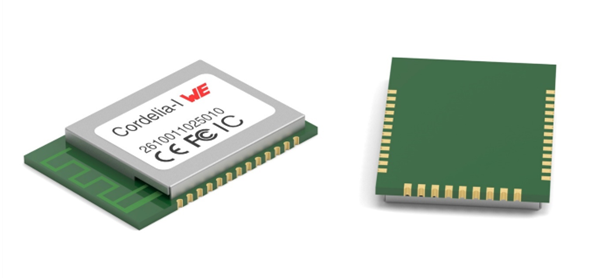
Figure 7. The Cordelia-I WiFi module from Würth Elektronik offers a wide range of features to ensure cybersecurity in IoT applications.
Secure cloud connection
To ensure a secure connection to the cloud, the device and the cloud should perform mutual authentication, followed by exchanging a session key, which is then used to encrypt the communication channel. This is usually done using the TLS protocol.
To establish a mutual TLS connection, the following cryptographic elements must be present on the device and in the cloud. The assets must also be properly aligned with each other.
On the device side, these are:
- Device ID: Unique device identity that is unchangeable and tamper-proof.
- Device key: This is a private key that is unique to each device and must be kept secret.
- Device certificate: This certificate contains the public key associated with the device private key.
- Root CA: This is the root CA (Certificate Authority) of the cloud, which is used to authenticate the cloud endpoint.
The process of storing these parameters on the end device is known as “device provisioning”.
On the cloud side this entails:
- List of the device IDs: A whitelist of device IDs that are authorized to establish connections.
- Device certificates: Public keys corresponding to the device IDs to enable device authentication.
The process of storing these parameters on the cloud endpoint is known as “cloud onboarding”. These cryptographic values must be stored securely on both the device and the cloud endpoint. Disclosure of these values at any stage of the device manufacturing lifecycle can compromise security. Human interaction with these cryptographic assets often poses the greatest threat. Therefore, the following steps must be followed to ensure maximum security.
The Cordelia-I module with the QuarkLink platform enables a secure cloud connection through zero touch device provisioning and secure cloud onboarding (Figure 8). In addition, full device management – including remote cloud migration – can be carried out throughout the lifecycle of a device [6].
Zero-touch provisioning with QuarkLink
In this process, the device is configured with all the parameters required to connect to the cloud platform, including cryptographic resources, without any need for human intervention.
This involves configuring multiple parameters, including the cryptographic assets on the device as described above. The Cordelia-I module, together with the QuarkLink platform, enables zero-touch provisioning. Each module is delivered with a unique, pre-installed, and hardware-based tamper-proof key set.
The private key is securely linked to the hardware and cannot be read out by the application. The application software can only access the public key and use the private key for further cryptographic operations.
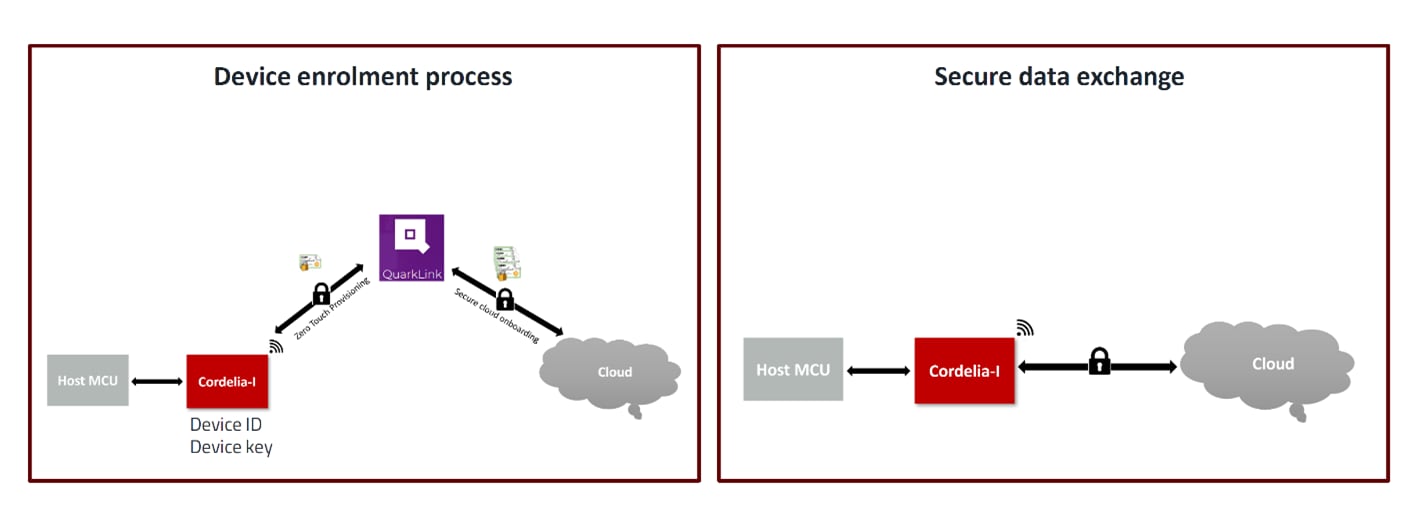
Figure 8. Enrolment to a cloud via zero-touch provisioning is handled by the QuarkLink IoT security platform from Crypto Quantique. Secure data exchange then takes place directly between the IoT device and the cloud. (Source: Würth Elektronik)
Literature:
[4] European Commission: Guide to the Radio Equipment Directive 2012/53/EU. https://ec.europa.eu/docsroom/documents/33162
[5] Cordelia-I WiFi IoT radio module from Würth Elektronik: www.we-online.com/en/components/products/article/2610011025010
[6] Product Guide: Wireless Connectivity & Sensors from Würth Elektronik: www.we-online.com/wcs-product-guide
Content you may also like


Our Author

Gerhard Stelzer
Senior Technical Editor, Technical Marketing & Digital Design-In Systems